DIY Epoxy Flooring Costs vs Professional Installation
Garage Floor Coating in Marlboro, NJ: DIY vs Professional

Compare DIY and pro epoxy on cost, timeline and finish so you can pick the best fit for your project.
What Are the Cost Differences Between DIY Epoxy Flooring and Professional Installation?

DIY requires resin, hardener and basic prep tools, so material costs are lower up front. Professionals add labor, specialized equipment and often higher-grade products that improve longevity and finish.
See the table for a side-by-side comparison.
| Service Type | Cost Range | Benefits |
|---|---|---|
| DIY Epoxy Flooring | $100 - $600 | Lower initial investment, flexibility in design |
| Professional Installation | $1,500 - $3,000 | Expert craftsmanship, warranty on work, time-saving |
DIY lowers up-front spending; professionals typically offer greater durability and fewer callbacks when warranties and prep quality are considered.
How Do Garage Floor Epoxy Costs Compare for DIY and Professional Services?
DIY garage kits are usually $100–$600; pro installs commonly run $1,500–$3,000 with labor and premium materials included.
What Factors Influence Professional Epoxy Floor Installation Prices in New Jersey?
Prices depend on labor rates, epoxy grade, slab condition (moisture, cracks), job complexity and season; budget for inspection and proper preparation.
What Are the Pros and Cons of DIY Epoxy Flooring Compared to Professional Installation?
Balance budget, time, skill and expected lifespan: DIY can save money if you have time and some skill; professionals deliver speed, consistent results and warranties.
What Are the Benefits and Drawbacks of DIY Epoxy Floor Application?
Benefits: lower up-front cost and control over design. Drawbacks: greater risk of poor prep, mixing errors and extended application time that can affect adhesion.
Why Choose Professional Epoxy Flooring Services in New Jersey?
Professionals use mechanical prep, industrial vacuums and controlled application to achieve smoother, longer-lasting finishes and typically provide warranties.
How Does the Installation Process Differ Between DIY and Professional Epoxy Flooring?
Main differences are tools, technique and quality control. Professionals use grinders, moisture testing and consistent application; DIY relies on consumer tools and manufacturer instructions.
What Preparation Steps Are Required for DIY Epoxy Flooring?
Clean and degrease, confirm the slab is dry, grind or etch for adhesion, repair cracks and follow the manufacturer's prep directions closely.
What Is the Professional Epoxy Floor Installation Process?
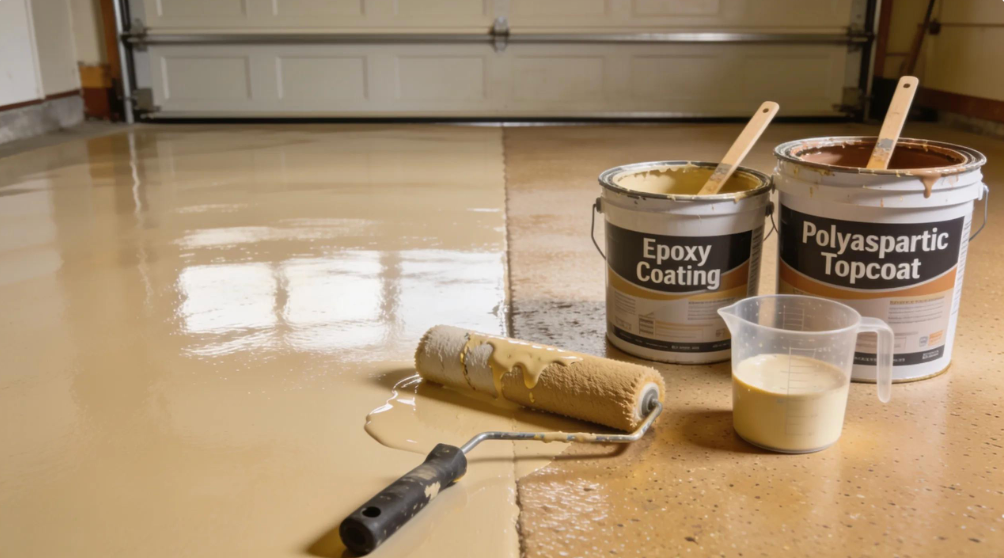
Pros test moisture and slab condition, perform mechanical prep, then apply primer, multiple epoxy coats and a durable topcoat for longevity and appearance.
How Can You Maintain and Extend the Longevity of Your Epoxy Flooring?
Regular cleaning and periodic topcoat touch-ups keep both DIY and professional epoxy looking and performing well for years.
What Are the Maintenance Requirements for DIY and Professionally Installed Epoxy Floors?

Sweep or vacuum grit, mop with a pH-neutral cleaner and use products compatible with your epoxy. Follow installer care instructions when provided.
How Does Proper Maintenance Affect Epoxy Flooring Durability?
Routine care reduces peeling and discoloration; refresh the topcoat every few years in busy areas to restore protection and appearance.
Explore ideas—browse our patio designs or read reviews.
Thinking of finishing a lower level? Basement remodeling adds usable space. Considering epoxy for your garage? Ready to schedule? Contact us.
Frequently Asked Questions
What are the environmental impacts of epoxy flooring?
Epoxy can release VOCs during installation; choose low-VOC or water-based products and ventilate properly.
How can I troubleshoot issues with my epoxy flooring after installation?
Identify the cause—poor prep, moisture or incorrect mixing. Sand and recoat small bubbles; consult a pro for major issues.
What types of decorative options are available?
Colored flakes, metallic pigments and custom patterns are common.
How long does epoxy flooring last?
Typically 10–20 years depending on installation quality and maintenance.
Conclusion
DIY can save money, but professional installation usually delivers a more durable, better-looking result with warranty protection.
New Paragraph