Garage Floor Coating in NJ: Epoxy vs Polyaspartic — What New Jersey Homeowners Must Know
Garage Floor Coating in NJ: Epoxy vs Polyaspartic — What New Jersey Homeowners Must Know

A professionally coated garage floor protects concrete, improves safety, and transforms a utilitarian space into a durable, low-maintenance area that stands up to New Jersey weather and daily wear. This article explains what garage floor coatings are, why the epoxy vs polyaspartic choice matters for NJ homeowners, and how to match coating chemistry to climate, traffic, and long-term value.
You will learn the composition and application differences between epoxy and polyaspartic systems, pros and cons for NJ climate, freeze–thaw considerations, salt exposure, cure times, UV resistance, maintenance, and which coating makes sense for your garage. At the end, you'll also understand when to use a professional installer and why local experience matters.
What Are Garage Floor Coatings and Why Do NJ Homeowners Need Them?
Garage floor coatings are engineered surface protection systems applied over concrete to improve durability, resist stains, and create an attractive finished surface. They form a bonded system of primer, basecoat, optional decorative flake, and a topcoat that seals the floor against abrasion, chemicals, and moisture.
New Jersey’s climate makes coatings more than cosmetic — freeze–thaw cycles, seasonal moisture, and road salt accelerate concrete breakdown unless a protective coating is applied.
What Is Epoxy Garage Floor Coating?
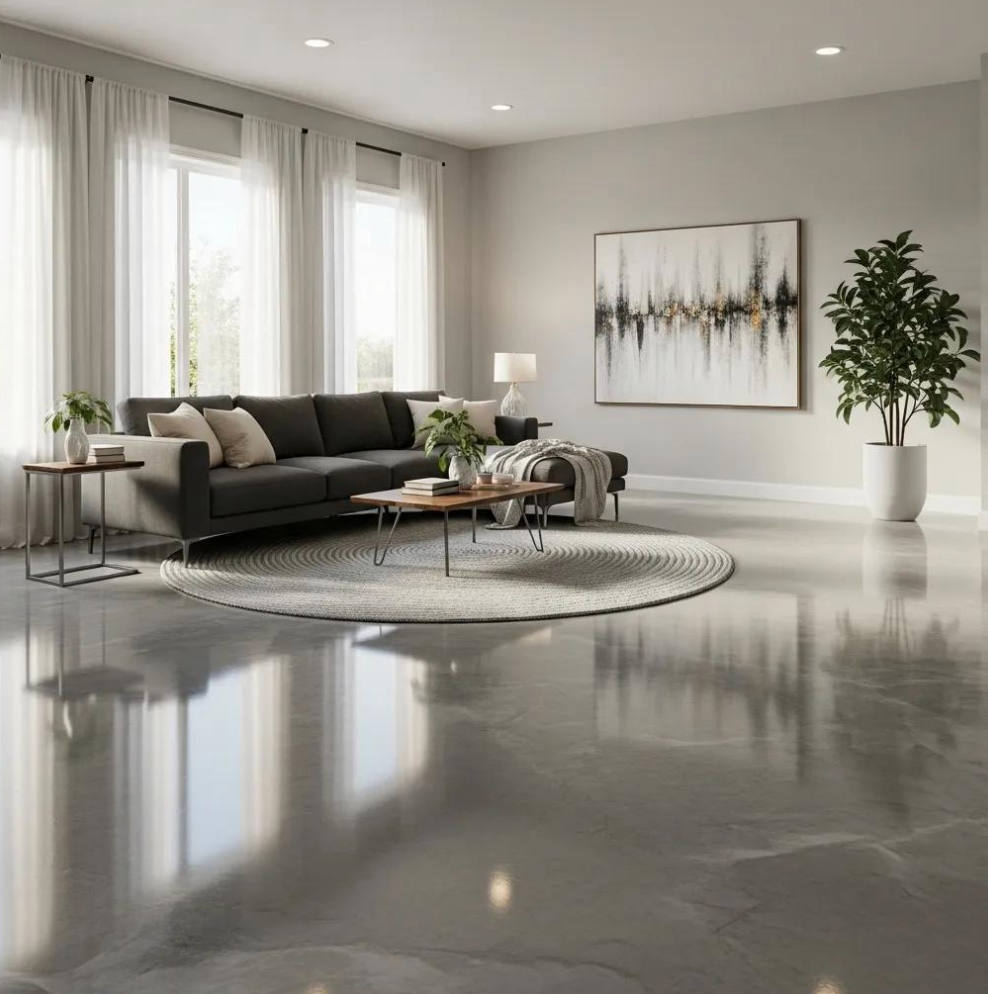
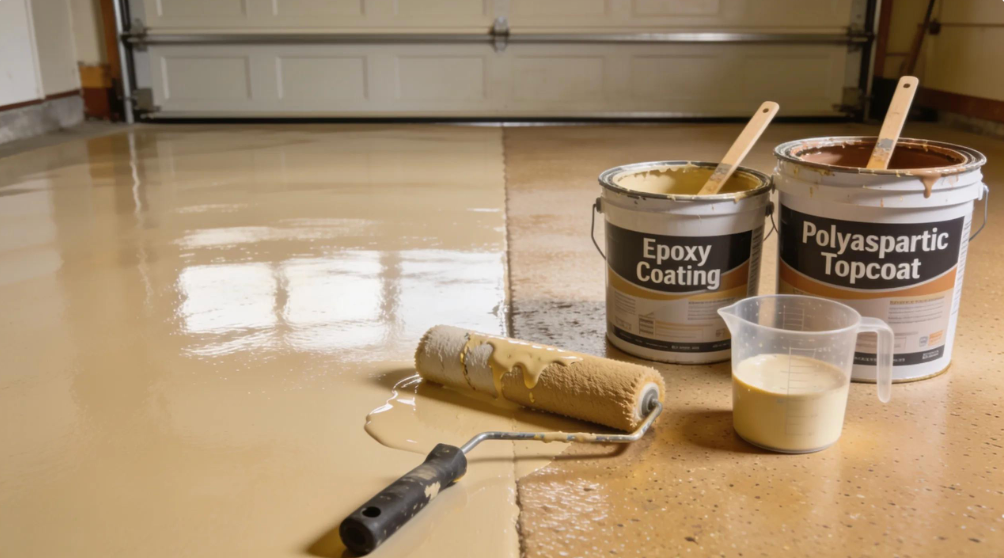
Epoxy is a two-part resin system that bonds to concrete after proper grinding or surface prep. It comes in solid-color, flake, and metallic options. Cure time ranges from 24–72 hours for light use and several days for full return to traffic. Epoxy performs well in many residential garages but is sensitive to UV exposure unless topcoated with a UV-stable aliphatic layer.
What Is Polyaspartic Garage Floor Coating?
Polyaspartic is a fast-curing, UV-stable aliphatic polyurea designed to withstand New Jersey climate swings, sun exposure, and thermal expansion. It cures within hours, making garages usable the same day. Due to its rapid working time and sensitivity to temperature/humidity, professional installation is strongly recommended.
What Are the Pros and Cons of Epoxy Garage Floor Coatings in New Jersey?

Epoxy is cost-effective, customizable, and durable for general use, but slower curing and UV sensitivity are limiting factors in many NJ garages.
Epoxy Subtypes and Their Best Uses (Replaces Table)
- Solid Epoxy – Lower cost and good durability. Best for budget-minded homeowners with low-UV, lighter-use garages.
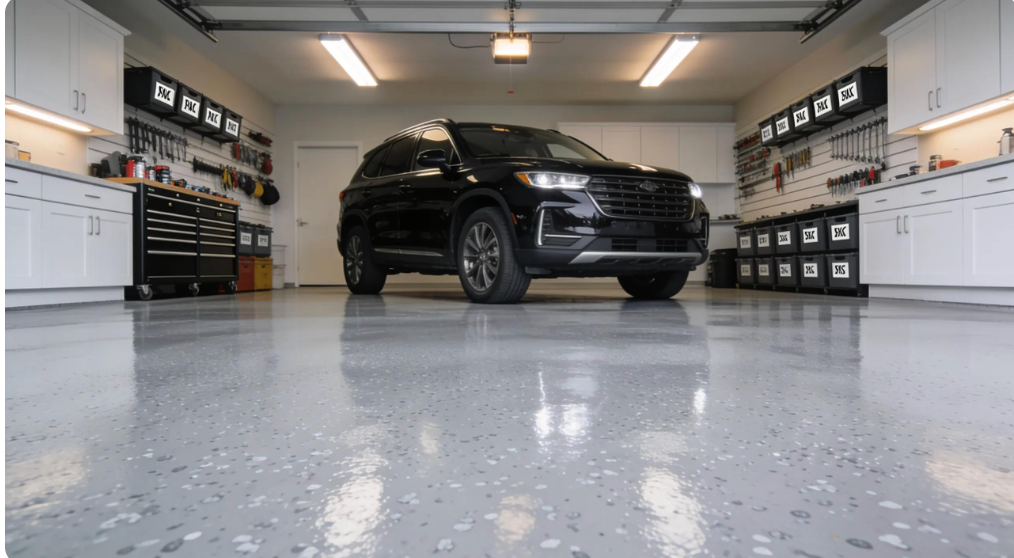
- Epoxy Flake System – Moderate cost, excellent abrasion resistance. Decorative flakes add slip resistance and hide imperfections.
- Metallic Epoxy – High cost, premium decorative look. Great for showroom aesthetics but requires careful prep and topcoating.
Key Benefits of Epoxy Garage Floors
- Strong chemical and abrasion resistance.
- Wide range of decorative looks.
- Slip-resistant when using flake systems.
- Cost-effective for most NJ garages when installed properly.
Limitations of Epoxy in NJ Climate
- Can yellow under sunlight without a UV-stable topcoat.
- Slower cure time = longer downtime for homeowners.
- Moisture vapor issues can cause blistering or adhesion failure.
- More prone to hot-tire pickup compared to polyaspartic.
Advantages & Disadvantages of Polyaspartic Garage Floor Coatings
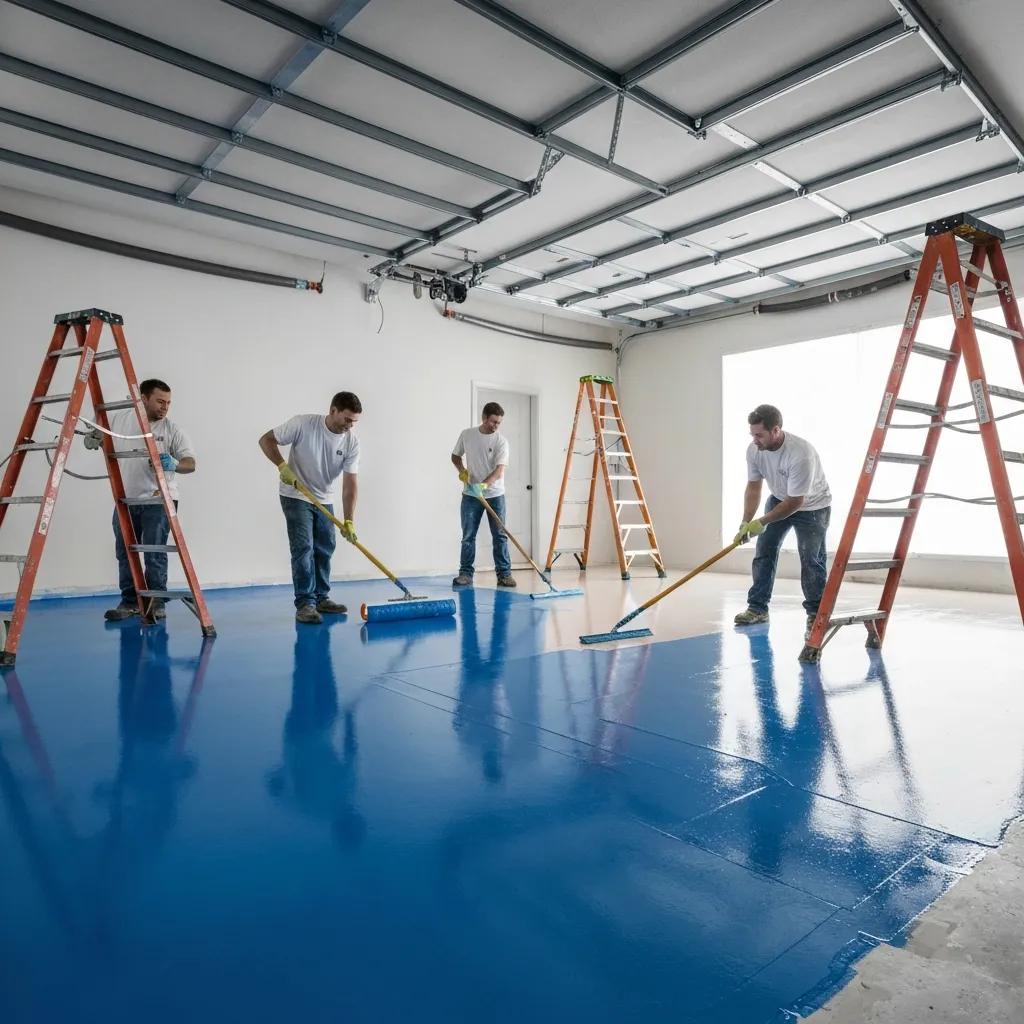
Benefits of Polyaspartic
- Fast cure — ready for light use within hours.
- UV-stable — won’t yellow in sun-exposed NJ garages.
- Superior hot-tire resistance.
- More flexible — handles freeze–thaw stress better.
- Less vulnerable to heat, humidity, and abrasion.
Drawbacks of Polyaspartic
- Higher material and installation cost.
- Short working time — DIY installation is nearly impossible.
- Requires strict control over temperature and humidity during installation.
How Epoxy vs Polyaspartic Compare for NJ Homes (Replaces Table)
- Durability: Epoxy is strong but polyaspartic handles sunlight and temperature swings better.
- UV Resistance: Polyaspartic has intrinsic UV stability; epoxy needs a UV topcoat.
- Cure Time: Epoxy: 24–72 hours. Polyaspartic: hours.
- Cost: Epoxy is cheaper upfront; polyaspartic offers better lifecycle value.
- Hot-Tire Pickup: More common with epoxy; rare with polyaspartic.
New Jersey Climate Factors That Affect Coating Performance (Replaces Table)
- Road Salt: Causes abrasion and chemical wear → use flexible, durable topcoats.
- Freeze–Thaw Cycles: Slab movement requires flexible coatings and proper joint repair.
- Humidity: Moisture vapor testing is essential before coating.
- Direct Sunlight: Choose UV-stable coatings to prevent yellowing.
How NJ Weather Impacts Coatings
NJ’s temperature swings, humidity, and salt exposure demand coatings that are flexible, UV-stable, and properly bonded. Polyaspartic excels in these conditions, but epoxy can perform well with proper prep and topcoating.
Which Coating Fits Your Garage?
- Budget project: Epoxy flake system.
- Fast turnaround or sun exposure: Polyaspartic.
- Heavy workshop use: High-build epoxy or polyaspartic.
- Best of both worlds: Epoxy base + polyaspartic topcoat.
Why Choose Stonecraft NJ for Garage Floor Coating?
Stonecraft NJ specializes in epoxy and polyaspartic floor systems for residential and commercial clients across New Jersey.
Related services:
Installation Process
- Inspection & moisture testing
- Diamond grinding or shot-blasting
- Crack/joint repair
- Primer + basecoat + flake broadcast
- Polyaspartic topcoat
- Cure & return-to-service timeline
Get a Free Quote
- Send photos and square footage
- Schedule an on-site inspection
- Review coating options and pricing
Serving Lakewood, Toms River, Brick Township, Howell, Jackson, Freehold, Point Pleasant, and surrounding New Jersey areas.